
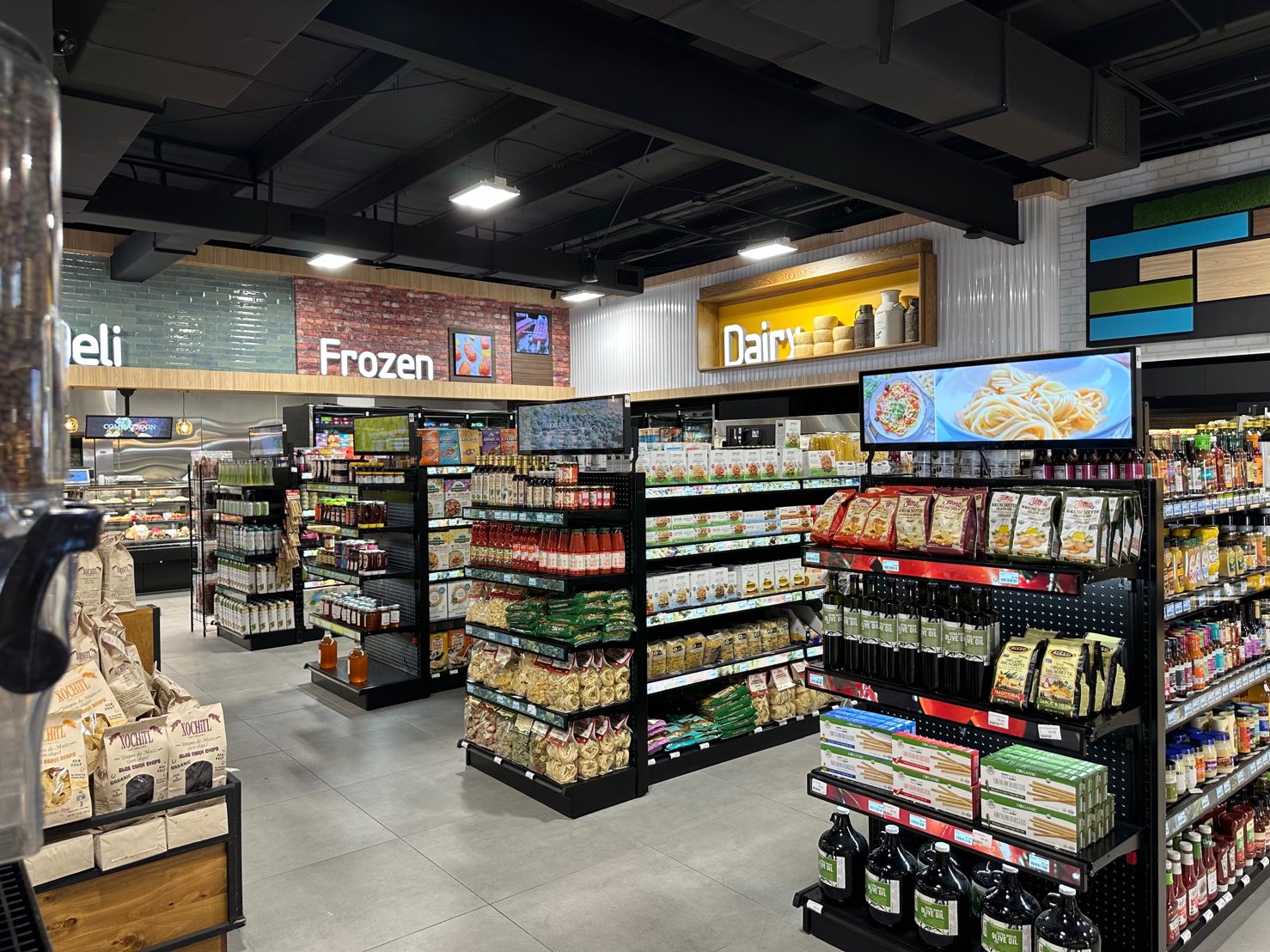
In the competitive world of retail, a 15% increase in sales is the kind of result that turns heads across the industry. When a major North American grocery chain achieved this remarkable growth through strategic deployment of shelf edge LCD displays (SLEDs), competitors took notice. This case study examines how the retailer transformed its operations, enhanced customer engagement, and unlocked new revenue streams—all while navigating the complex challenges of technology implementation.
The Retailer: Profile and Market Context
The subject of this case study is a regional grocery chain operating 127 stores across the Southeastern United States. With annual revenues of approximately $4.2 billion, the retailer held strong positions in urban and suburban markets but faced intensifying competition from national chains and emerging discount retailers. Customer demographics skewed toward middle-income families aged 25-55, with particular concentration in suburban areas with significant foot traffic from working professionals seeking convenient shopping experiences.
The retailer recognized that traditional differentiation strategies—price leadership, product variety, and store ambiance—were becoming increasingly difficult to sustain against well-capitalized competitors making substantial technology investments. Market research indicated that shoppers valued convenience, speed, and relevant promotions above other factors, suggesting that technology-enabled shopping experiences could represent a meaningful competitive advantage. The decision to explore shelf edge display technology emerged from this strategic context, driven by the desire to create differentiated in-store experiences while simultaneously improving operational efficiency.
Initial assessments revealed significant gaps in the retailer’s technology infrastructure. Price changes required manual updates across all stores, consuming approximately 3,200 staff hours weekly and introducing errors that frustrated both customers and employees. Promotional displays relied on paper signs and temporary endcap arrangements, limiting flexibility and constraining the retailer’s ability to respond to competitive pressures. The absence of real-time inventory visibility meant stockouts occurred frequently, particularly for high-velocity products during peak seasons, directly impacting sales performance and customer satisfaction metrics.
The Challenge: Declining Margins and Rising Competition
The retailer confronted multiple interconnected challenges threatening long-term viability. Labor costs associated with manual price management consumed approximately $1.8 million annually across the store network, representing a significant drag on profitability in an industry where net margins typically range from 1-3%. Price errors stemming from manual update processes generated customer complaints at a rate of approximately 0.3% of transactions, eroding trust and contributing to measurable declines in customer satisfaction scores year-over-year.
Competitive pressure intensified as larger retailers invested heavily in technology-enabled shopping experiences. A national competitor launched a mobile application offering personalized promotions based on purchase history, drawing price-sensitive customers away from the regional chain. Simultaneously, a hard-discount retailer entered the market with aggressive pricing on staple categories, forcing the regional player to choose between matching prices and sacrificing margin or risking volume loss. The combination of operational cost pressures and competitive threats created urgency for transformative change.
Inventory management challenges compound the operational difficulties. Without real-time visibility into shelf conditions, the retailer experienced stockout rates of 8-12% for promoted items and 5-7% for core assortment products. Each stockout represented not only immediate lost sales but also potential long-term customer defection as shoppers encountered empty shelves repeatedly. The annual cost of stockouts, calculated as lost sales plus markdown expenses for expedited replenishment, was estimated at $2.4 million—roughly equivalent to the entire annual labor budget for price management.
The promotional planning process suffered from similar limitations. Marketing teams could only plan promotions weeks in advance, limiting ability to respond to competitive moves or capitalize on emerging trends. The physical labor required to set up promotional displays meant that many potential promotional opportunities went unrealized due to budget constraints on labor allocation. Digital signage solutions existed but were expensive to deploy and difficult to update, constraining their utility for dynamic promotional content.
The Solution: Comprehensive Shelf Edge Display Deployment
After evaluating multiple technology options, the retailer partnered with a leading shelf edge display provider to implement a comprehensive solution across all 127 stores. The deployment encompassed 180,000 individual display units across diverse form factors, from compact 4-inch units for standard shelf positions to 15-inch interactive displays for high-traffic endcap locations. Integration with existing point-of-sale systems, inventory management platforms, and the retailer’s data warehouse created a unified technology ecosystem enabling sophisticated automation and analytics capabilities.
The implementation proceeded in three phases over an eighteen-month period. The first phase focused on 30 stores representing diverse market contexts and store formats, allowing the retailer to validate technology performance and refine operational procedures before broader deployment. Phase two expanded to an additional 47 stores, with phase three completing the remaining 50 locations. This phased approach enabled organizational learning while managing implementation risk and allowing for course corrections based on early experience.
Hardware selection prioritized durability, connectivity, and total cost of ownership. Display units featured industrial-grade components rated for extended operation in retail environments, with battery-powered units offering five-year replacement cycles for locations lacking convenient electrical access. Wireless connectivity through dedicated store networks ensured reliable communication with centralized management platforms while maintaining separation from customer-facing Wi-Fi infrastructure. Initial hardware investment totaled approximately $14.2 million, with ongoing maintenance and content management costs of approximately $1.8 million annually.
Content management capabilities proved critical to realizing the solution’s full potential. The centralized platform enabled marketing teams to create, approve, and deploy promotional content across all stores within hours rather than weeks. Dynamic content rules allowed automatic price updates based on inventory levels, competitive intelligence feeds, or time-of-day patterns. The ability to schedule content in advance while retaining flexibility for real-time adjustments transformed the promotional planning function from a labor-intensive process to a strategic capability delivering measurable commercial impact.
Implementation Journey: Challenges and Adaptations
The deployment journey was not without challenges, and the retailer’s willingness to adapt proved essential to ultimate success. Initial software integration with legacy systems revealed compatibility issues requiring custom API development and extended testing periods. The original implementation timeline of twelve months stretched to eighteen as the technical teams worked through integration complexities, though the extended schedule enabled more robust architecture that would support future capability expansion.
Store associate training emerged as a more significant challenge than anticipated. While technology deployment proceeded according to plan, adoption rates in early-phase stores lagged expectations as associates struggled to incorporate new workflows into established routines. The retailer addressed this challenge through dedicated in-store champions who provided peer support and rapid issue resolution, combined with simplified operational interfaces that reduced the cognitive burden on staff members. Training investment ultimately totaled approximately $800,000 across the deployment, including development of comprehensive documentation and video tutorials accessible on demand.
Content quality initially suffered from the same creative constraints that limited traditional promotional materials. The marketing team approached digital content with mindsets optimized for print, resulting in underwhelming visual presentations that failed to leverage the medium’s full potential. Investment in digital content creation capabilities—including specialized design resources, motion graphics expertise, and video production capacity—addressed this gap over time. Content effectiveness improved measurably, with engagement metrics increasing 40% as the team developed fluency with the new medium.
Network reliability concerns materialized during phase two deployment when several stores experienced connectivity issues disrupting communication with central management systems. The technical team responded by implementing edge computing capabilities allowing displays to operate autonomously during network interruptions, with synchronization occurring automatically when connectivity restored. This architectural enhancement also improved system responsiveness, reducing perceived latency for content updates from seconds to milliseconds.
Measurable Outcomes: 15% Sales Growth and Beyond
The comprehensive shelf edge display deployment delivered substantial improvements across financial, operational, and customer experience dimensions. Total sales increased 15% within eighteen months of full deployment, exceeding initial projections of 8-10% growth and representing incremental revenue of approximately $630 million annually at the store network level. The magnitude of this improvement reflected not only pricing and promotional optimizations but also inventory service level improvements that converted previously lost sales into completed transactions.
Operational cost savings proved equally significant. Elimination of manual price management saved approximately $1.9 million annually in direct labor costs, with additional savings from reduced pricing error remediation, promotional setup labor, and inventory counting activities. Total operational cost reduction reached $3.2 million annually when accounting for all affected processes, delivering a compelling return on the technology investment even before considering revenue improvements.
Customer experience metrics showed marked improvements aligned with strategic objectives. Net Promoter Score increased 12 points, reflecting greater willingness among satisfied customers to recommend the retailer to others. Transaction completion rates improved as customers found desired products available more consistently, with stockout rates declining from 8-12% to 2-4% for promoted items. Shopping trip duration remained stable, suggesting that enhanced experiences did not come at the expense of convenience—a critical consideration for time-constrained target demographics.
The advertising revenue component exceeded expectations. Brand partnerships generated approximately $4.8 million annually in new revenue as CPG companies recognized the value of reaching shoppers at decisive purchase moments. Premium placements on high-traffic displays commanded rates of $800-2,500 per month depending on location and promotional format, with brands willing to pay premiums for access to the retailer’s loyal customer base. This advertising revenue stream transformed the shelf edge display deployment from a pure cost play to a genuine profit center generating positive returns on an ongoing basis.
Inventory optimization contributed meaningfully to the overall result. Real-time visibility into shelf conditions enabled proactive replenishment that reduced stockouts while simultaneously minimizing overstock situations requiring markdowns. The combination of improved in-stock availability and reduced markdown expenses contributed approximately $1.4 million annually to the financial improvement, with additional intangible benefits from enhanced customer perception of product freshness and variety.
Key Success Factors and Lessons Learned
The retailer’s success reflected deliberate attention to several critical factors that other organizations would be wise to consider when undertaking similar initiatives. Executive sponsorship proved essential in maintaining organizational commitment through implementation challenges. The CEO’s visible support for the initiative ensured adequate resource allocation and maintained momentum when difficulties emerged, preventing the kind of scope reductions that often undermine technology transformations.
Integration architecture prioritizing future flexibility enabled capabilities that were not anticipated during initial planning. The decision to implement robust APIs and edge computing capabilities, rather than minimal viable integrations, created a foundation for ongoing innovation including recent deployments of computer vision for inventory monitoring and integration with emerging autonomous store formats. This architectural investment paid dividends extending well beyond the original implementation scope.
Phased deployment allowed for organizational learning and capability building that would have been impossible with a big-bang approach. The eighteen-month timeline, while longer than originally planned, enabled the development of operational expertise and content capabilities that maximized the ultimate return on technology investment. Organizations considering similar deployments should resist pressure to compress timelines in ways that sacrifice the learning and adaptation process.
Investment in change management, including training, communication, and ongoing support, proved as critical as technology selection. The retailer’s experience demonstrated that shelf edge display deployments fail not because of hardware or software limitations but because of organizational resistance and capability gaps. Budget allocation for change management activities should be considered essential, not optional, components of implementation planning.
Content strategy evolution required sustained attention and investment. Early content underperformed because the organization approached digital displays with legacy mindsets suited to static media. Recognition of this gap and commitment to developing digital-first content capabilities enabled the engagement improvements that ultimately drove commercial results. Organizations should plan for a content maturation curve spanning twelve to eighteen months before achieving optimal performance.
Sustainability and Future Roadmap
The retailer continues to evolve its shelf edge display capabilities, with several initiatives underway that extend the platform’s value proposition. Computer vision integration is currently being piloted in thirty stores, enabling automated planogram compliance monitoring, stockout detection, and shopper behavior analysis. Early results suggest additional sales improvements of 3-5% from optimized product placement and faster response to inventory discrepancies.
Sustainability messaging capabilities have been developed in response to growing consumer interest in environmental impact. Displays now communicate carbon footprint information, recyclability details, and local sourcing claims for participating products. Early testing indicates positive customer response to these communications, with willingness to pay premiums increasing 8-12% for products with prominent sustainability positioning.
Integration with the retailer’s loyalty platform enables personalized promotional content delivered through shelf edge displays based on individual purchase history and preferences. Test deployments in select stores show promise for driving category penetration improvements, particularly for brands that customers have not previously purchased but which align with their established preferences. Full deployment of personalized capabilities is planned for the coming fiscal year.
The autonomous store initiative represents the most ambitious extension of shelf edge display capabilities. The retailer is piloting a smaller-format format featuring extensive shelf edge technology integration with grab-and-go payment technologies, eliminating traditional checkout processes. While still in early development, this format could fundamentally reshape the retailer’s store network strategy and create new competitive advantages in convenience-oriented market segments.
Conclusion: Proof That Technology Investment Pays Off
This case study demonstrates that strategic shelf edge display deployment can deliver transformative results for retailers willing to invest thoughtfully and execute rigorously. The 15% sales increase achieved by this regional grocery chain reflected not merely technology deployment but comprehensive transformation of pricing, promotional, and inventory management processes enabled by intelligent display capabilities. Organizations considering shelf edge display initiatives should recognize that the technology represents a foundation for broader operational evolution, not simply a hardware upgrade to existing processes.
The success factors identified—executive sponsorship, integration architecture, phased deployment, change management investment, and content capability development—provide a roadmap for organizations undertaking similar initiatives. While every deployment will face unique challenges, the fundamental dynamics of shelf edge display value creation remain consistent across retail contexts. Retailers who approach these initiatives as strategic transformations rather than technology projects position themselves to capture the substantial benefits that intelligent shelf edge platforms can deliver.



Leave A Comment