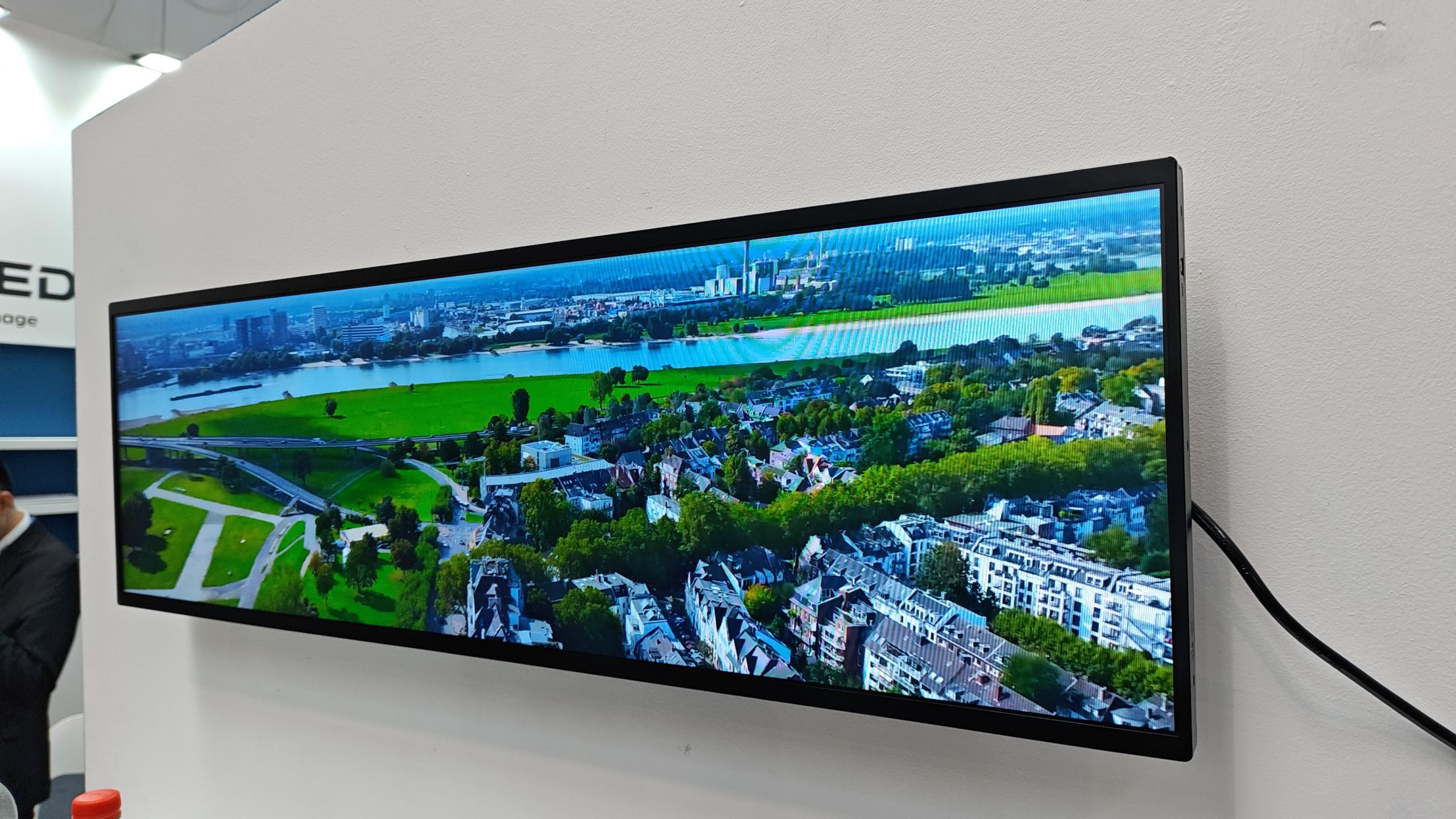
When standard off-the-shelf stretched bar displays cannot meet specific project requirements, custom development through original equipment manufacturer (OEM) and original design manufacturer (ODM) partnerships provides access to displays engineered precisely for unique applications. From specialized aspect ratios and dimensions to proprietary interfaces and branding elements, custom stretched bar displays enable product differentiation and optimal performance that standardized products simply cannot achieve. This comprehensive guide explores the customization landscape for stretched bar LCD displays, explaining the distinctions between OEM and ODM approaches, the range of customization options available, and how to navigate partnerships that deliver displays matched exactly to your requirements.
Understanding OEM Versus ODM: Fundamental Partnership Distinctions
The terminology surrounding custom display development often causes confusion, particularly regarding the distinction between OEM and ODM arrangements. Understanding these fundamental partnership models enables informed decisions about how best to engage display manufacturers for custom development projects. The choice between OEM and ODM approaches significantly influences development timelines, investment requirements, and intellectual property arrangements throughout the custom display lifecycle.
OEM partnerships involve working with display manufacturers to produce displays designed to your precise specifications. In OEM arrangements, you provide complete technical specifications including dimensional requirements, performance parameters, interface requirements, and aesthetic elements, and the manufacturer produces displays meeting these exact requirements. The resulting products typically bear your brand and are marketed as your offerings, while the manufacturing partner operates as your production facility. This approach provides maximum control over design decisions and intellectual property ownership, making OEM partnerships attractive for companies seeking to establish differentiated product lines without investing in manufacturing infrastructure. OEM arrangements typically require substantial upfront investment in tooling, certification, and production preparation, with development timelines extending twelve to eighteen months from specification to production ramp. The financial commitment reflects the manufacturer’s investment in dedicated production capacity and tooling modifications necessary to accommodate custom specifications.
ODM partnerships engage display manufacturers that offer existing product platforms which can be modified to meet specific requirements. In ODM arrangements, you select from the manufacturer’s catalog of available platforms and specify modifications such as branding elements, software configurations, or minor dimensional adjustments. ODM products typically incorporate manufacturer-owned intellectual property and design elements, with customization limited to parameters the manufacturer has designed to accommodate variation. This approach reduces development timelines and upfront investment compared to full OEM arrangements, enabling faster market entry for products based on established platforms. ODM arrangements prove most effective for applications where standard platforms meet most requirements with limited customization needs, such as adding corporate branding to existing display models or configuring software for specific market requirements. Development timelines for ODM modifications typically span three to six months, with substantially lower upfront investment compared to full OEM arrangements.
Hybrid arrangements combining elements of both OEM and ODM approaches have emerged as popular alternatives for many custom display projects. These hybrid partnerships leverage manufacturer design platforms for elements where standard approaches prove adequate while developing custom components for aspects requiring differentiated specifications. Hybrid approaches enable balanced tradeoffs between development efficiency and design customization, potentially reducing timelines and costs while still delivering meaningful product differentiation. Careful analysis of specific project requirements enables identification of elements suitable for platform-based approaches versus those demanding full custom development.
Customization Dimensions: What Can Be Customized in Stretched Bar Displays
Custom stretched bar display development encompasses multiple dimensions where specifications can be tailored to application requirements. Understanding the full range of customization possibilities enables effective specification development and realistic expectation setting during partnership discussions with display manufacturers. Not all customization dimensions are equally accessible or cost-effective, requiring prioritization based on application requirements and project budget constraints.
Physical dimensions including width, height, and depth represent the most fundamental customization options for stretched bar displays. Standard products are limited to manufacturer-specified dimensions, but custom development enables specification of exact dimensions matched to installation requirements. Width customization spans the complete range from compact panels measuring just a few centimeters to extended installations measuring several meters, with height proportional to specified aspect ratios. Depth customization affects both thermal management requirements and mounting options, with thinner profiles enabling installation in space-constrained environments while thicker profiles accommodate enhanced brightness or environmental protection features. Dimensional customization requires coordinated development of display panels, backlight systems, and mechanical housings to achieve specified form factors while maintaining required performance specifications.
Aspect ratio customization extends beyond standard offerings to enable unique proportions matched to specific application requirements. While standard products are limited to common ratios like 16:3, 32:9, and 38:5, custom development enables specification of unusual ratios such as 24:5 for architectural installations or 45:9 for large-format digital signage applications. Aspect ratio customization requires development of customized timing controllers and display driver electronics matched to specified resolution and refresh rate requirements, representing significant development investment but enabling display configurations impossible with standard products. The extended aspect ratios enabled through custom development create visual impact impossible with standard displays, justifying additional development investment for applications where unique visual proportions provide meaningful differentiation.
Brightness and performance specifications offer substantial customization opportunities affecting display effectiveness in specific deployment environments. Standard products are optimized for common deployment scenarios, but custom specifications can target exact brightness levels, color temperature requirements, or contrast specifications appropriate for specific applications. High-brightness specifications for outdoor or high-ambient-light applications may require custom backlight development, while specialized color rendering requirements might necessitate custom color filter or LED specifications. Performance customization enables displays optimized precisely for intended deployment environments rather than compromised for average conditions across diverse deployment scenarios.
Interface and connectivity customization ensures compatibility with existing system infrastructure and enables integration features required for specific applications. Standard display interfaces typically include HDMI, DisplayPort, and USB connections, but custom development can incorporate specialized interfaces including LVDS for direct system integration, MIPI for embedded applications, or proprietary interfaces for specific system architectures. Control interface customization enables integration with building management systems, automation platforms, or specialized content management infrastructure requiring particular communication protocols. Interface customization proves particularly important for embedded applications where displays must integrate seamlessly with system electronics rather than operating as standalone components.
Aesthetic customization encompasses branding elements, color specifications, and visual design features that differentiate finished products in marketplace contexts. Bezel design, logo placement, and color coordination enable products aligned with corporate branding guidelines or product line aesthetics. Display housing materials and finishes can be customized for durability requirements, visual preferences, or environmental considerations. These aesthetic customizations prove particularly important for consumer-facing products where visual differentiation influences purchasing decisions and brand recognition.
The Custom Development Process: From Concept to Production
Successful custom stretched bar display development follows structured processes that systematically transform application requirements into production-ready specifications. Understanding the development process enables effective project planning, realistic timeline setting, and appropriate resource allocation throughout custom display projects. The process typically spans twelve to eighteen months from initial concept through production ramp, with substantial investment in engineering, tooling, and certification activities that must be completed before production begins.
The initial concept and specification phase establishes foundational requirements that guide subsequent development activities. During this phase, application requirements are documented in detail, including physical dimensions, performance specifications, environmental requirements, interface specifications, and aesthetic preferences. Competitive analysis and market research inform specification decisions by identifying differentiated features that create marketplace advantage. Specification development should balance performance ambitions against cost and timeline constraints, with clear prioritization distinguishing essential requirements from desirable enhancements. The specification phase concludes with detailed technical documentation sufficient to enable manufacturer evaluation and quotation activities.
Manufacturer selection and partnership establishment follows specification completion, involving evaluation of potential manufacturing partners and negotiation of commercial terms. Evaluation criteria include technical capability assessment for required customization dimensions, manufacturing capacity and quality system verification, financial stability evaluation for long-term partnership viability, and intellectual property protection assessment. The selection process should include facility visits enabling direct assessment of manufacturing capabilities, quality systems, and development team expertise. Commercial negotiations address development investment allocation, unit pricing for production volumes, intellectual property ownership arrangements, and warranty provisions for custom products. Partnership establishment requires careful attention to contractual provisions governing intellectual property, confidentiality, and dispute resolution that may significantly influence project outcomes.
Engineering development translates specifications into detailed designs and prototypes enabling design validation before production commitment. Mechanical engineering develops detailed housing designs, thermal management solutions, and mounting configurations through iterative refinement using simulation tools and prototype evaluation. Electronic engineering designs timing controllers, power systems, and interface electronics matched to specified requirements, with multiple design iterations typically required to achieve optimal performance. Optical engineering optimizes backlight configurations, color specifications, and viewing angle characteristics through simulation and prototype measurement. Each engineering discipline contributes to comprehensive design documentation that enables tooling development and production preparation.
Tooling and ramp preparation creates manufacturing infrastructure necessary for custom display production. Tooling development encompasses molds for plastic components, fixtures for assembly processes, and test equipment for production verification. Tooling investment represents substantial upfront cost that must be recovered through production volumes, creating economic pressure toward higher production quantities. Production preparation includes process development, operator training, and quality system implementation for custom product lines. The tooling and preparation phase transitions to pilot production when tooling and processes are verified ready for initial production trials.
Certification and compliance verification ensures custom displays meet applicable regulatory requirements for intended markets. Display products typically require electromagnetic compatibility (EMC) certification, safety certification, and environmental compliance verification depending on target market requirements. Certification timelines vary significantly across markets and product categories, with complex products or unfamiliar markets requiring extended certification periods. Certification failures can necessitate design modifications with associated timeline and cost impacts, making early engagement with certification bodies advisable to minimize certification risk.
Investment Considerations: Understanding Custom Display Development Costs
Custom stretched bar display development requires substantial financial investment reflecting the engineering, tooling, and certification activities necessary to bring unique products from concept to production. Understanding the cost structure of custom development enables realistic project planning and informed decision-making about customization scope optimization. The total investment required for custom display development typically ranges from $200,000 for modest ODM modifications to over $2,000,000 for highly differentiated OEM products requiring extensive engineering and tooling development.
Engineering development costs encompass salaries, equipment, and facilities required to complete mechanical, electronic, and optical engineering for custom displays. Complex customizations requiring novel engineering solutions typically demand extended engineering timelines and specialized expertise, increasing engineering costs substantially. Simple modifications to existing platforms using established engineering approaches require less engineering investment but also provide less differentiation. Engineering costs are typically incurred throughout the development process rather than as lump sums, enabling phase-gated investment aligned with development milestones.
Tooling investment creates manufacturing infrastructure specific to custom display designs, including molds for plastic components, fixtures for assembly processes, and test equipment for production verification. Tooling costs vary substantially based on display complexity and component count, with simple displays requiring $50,000 to $100,000 in tooling investment while complex custom products may require $500,000 or more. Tooling represents sunk investment that cannot be recovered if products fail to achieve production volumes, creating economic pressure toward designs compatible with standardized manufacturing approaches where possible.
Certification and compliance costs include testing fees, consultant fees, and regulatory submission costs necessary to achieve market access for custom displays. Certification requirements vary substantially across markets and product categories, with complex products or unfamiliar markets requiring extended and expensive certification processes. Early identification of all applicable certification requirements enables accurate cost estimation and timeline planning, avoiding costly surprises during later development phases. Budget contingency for potential certification failures or required modifications is advisable given the inherent uncertainty in certification processes.
Production unit costs for custom displays typically exceed those of standard products due to reduced scale economies and component customization costs. Custom display panels, specialized components, and limited production volumes combine to elevate per-unit manufacturing costs compared to standardized alternatives. The cost premium for custom displays may range from 20% to 200% or more compared to standard products with equivalent specifications, depending on customization scope and production volumes. Total cost of ownership analysis should account for both development investment and elevated unit costs when evaluating custom versus standard display options.
Selecting the Right Custom Display Partner
Manufacturing partner selection critically influences custom display project success, requiring systematic evaluation of capabilities, compatibility, and commitment across multiple dimensions. The extended development timelines and substantial investments characteristic of custom display projects demand partnership arrangements that align incentives, enable effective communication, and provide confidence in long-term viability. Effective partner selection requires comprehensive evaluation beyond initial commercial terms to assess underlying capability and compatibility factors that determine project outcomes.
Technical capability assessment examines manufacturing partner expertise across the customization dimensions relevant to your specific project requirements. Relevant capabilities include mechanical engineering for housing and thermal design, electronic engineering for timing controllers and interfaces, optical engineering for backlight and color specifications, and software engineering for firmware and integration features. Assessment approaches include review of past project portfolios, evaluation of engineering team qualifications, and verification of relevant manufacturing equipment and processes. Technical capability gaps identified during assessment should inform risk mitigation strategies or lead to partner elimination if capabilities prove inadequate for project requirements.
Quality system evaluation examines manufacturing partner capabilities for consistent production of displays meeting specified requirements throughout production lifecycles. Relevant quality system elements include incoming component verification, process control systems, outgoing testing protocols, and corrective action processes. Quality system assessment should include facility visits enabling direct observation of quality system operation and verification of quality system certifications. Quality system deficiencies identified during assessment may require remediation before project commitment or lead to partner elimination if deficiencies prove unacceptably severe.
Financial stability assessment examines manufacturing partner viability for long-term partnership spanning product lifecycle durations potentially extending ten years or longer. Relevant financial factors include profitability trends, debt levels, access to capital, and revenue concentration. Financial stability concerns identified during assessment may require contractual protections, escrow arrangements, or partner elimination to mitigate partnership risk. The extended product lifecycles typical of commercial display applications demand manufacturing partner stability sufficient to support products throughout intended market presence periods.
Communication and cultural compatibility significantly influence partnership effectiveness throughout custom development projects spanning twelve to eighteen months or longer. Effective communication requires compatible communication practices, time zone alignment for collaborative work, and language proficiency adequate for technical discussions. Cultural compatibility influences approaches to problem-solving, conflict resolution, and relationship management throughout demanding development processes. Assessment approaches include reference conversations with existing partners, observation of communication practices during initial interactions, and evaluation of responsiveness and transparency throughout quotation and negotiation processes.
Managing Custom Display Projects: Best Practices for Success
Successful custom display development requires effective project management practices that address the unique challenges of extended development timelines, substantial investment, and complex technical requirements characteristic of custom display projects. Systematic project management enables coordinated work across multiple engineering disciplines, timely issue identification and resolution, and progress tracking against planned milestones throughout development processes.
Milestone-based project structuring creates clear decision points enabling phase-gated investment aligned with development progress. Common milestones include specification completion, prototype validation, tooling completion, certification achievement, and production readiness. Each milestone should include explicit completion criteria and go/no-go decision points enabling informed continuation decisions based on demonstrated progress. Milestone-based structures provide opportunities for course correction when issues arise while maintaining momentum toward production objectives.
Cross-functional coordination integrates work across mechanical engineering, electronic engineering, optical engineering, and manufacturing preparation to ensure coherent development progress. Regular cross-functional reviews identify interface issues, dependency conflicts, and integration challenges requiring coordinated resolution. Cross-functional coordination proves particularly important during later development phases when individual engineering disciplines must integrate their work into coherent product designs.
Risk management identifies potential issues before they impact project outcomes, enabling proactive mitigation strategies rather than reactive problem resolution. Relevant risk categories include technical risk from novel engineering solutions, schedule risk from complex integration requirements, cost risk from scope changes or certification failures, and supply risk from component availability or quality issues. Risk mitigation strategies should be proportionate to risk probability and impact, with high-probability, high-impact risks receiving substantial mitigation investment while low-probability risks may be accepted with contingency planning.
Change management processes govern modifications to specifications or designs after initial establishment, ensuring changes are properly evaluated, approved, and implemented. Custom development projects inevitably encounter requirement changes due to evolving market conditions, discovered technical issues, or competitive developments. Effective change management ensures changes are properly scoped for cost and schedule impact, appropriately approved by authorized stakeholders, and systematically implemented without introducing unintended consequences.
Conclusion: Custom Development Enables Differentiated Products
Custom stretched bar display development through OEM and ODM partnerships enables products precisely matched to application requirements, creating differentiation impossible with standardized alternatives. The substantial investment and extended timelines characteristic of custom development demand careful partner selection, systematic project management, and clear recognition of the tradeoffs between customization and efficiency. Custom development proves most appropriate for applications where standard products cannot meet critical requirements or where differentiation creates marketplace advantages sufficient to justify development investment.
The custom development process transforms application requirements into production-ready specifications through structured phases spanning specification development, engineering design, tooling preparation, and certification. Effective project management enables coordinated progress across multiple engineering disciplines while managing risks and changes that inevitably arise during complex development projects. Manufacturing partner selection critically influences project success, requiring comprehensive evaluation of technical capability, quality systems, financial stability, and cultural compatibility beyond initial commercial terms.
For applications where custom development proves appropriate, the resulting products deliver performance and differentiation unavailable through standard alternatives. Custom stretched bar displays enable unique product architectures, optimized performance specifications, and distinctive visual presentations that create competitive advantages in demanding marketplace environments. The investment in custom development pays dividends throughout product lifecycles through enhanced performance, reduced integration costs, and marketplace differentiation that standard products cannot match.


Leave A Comment