
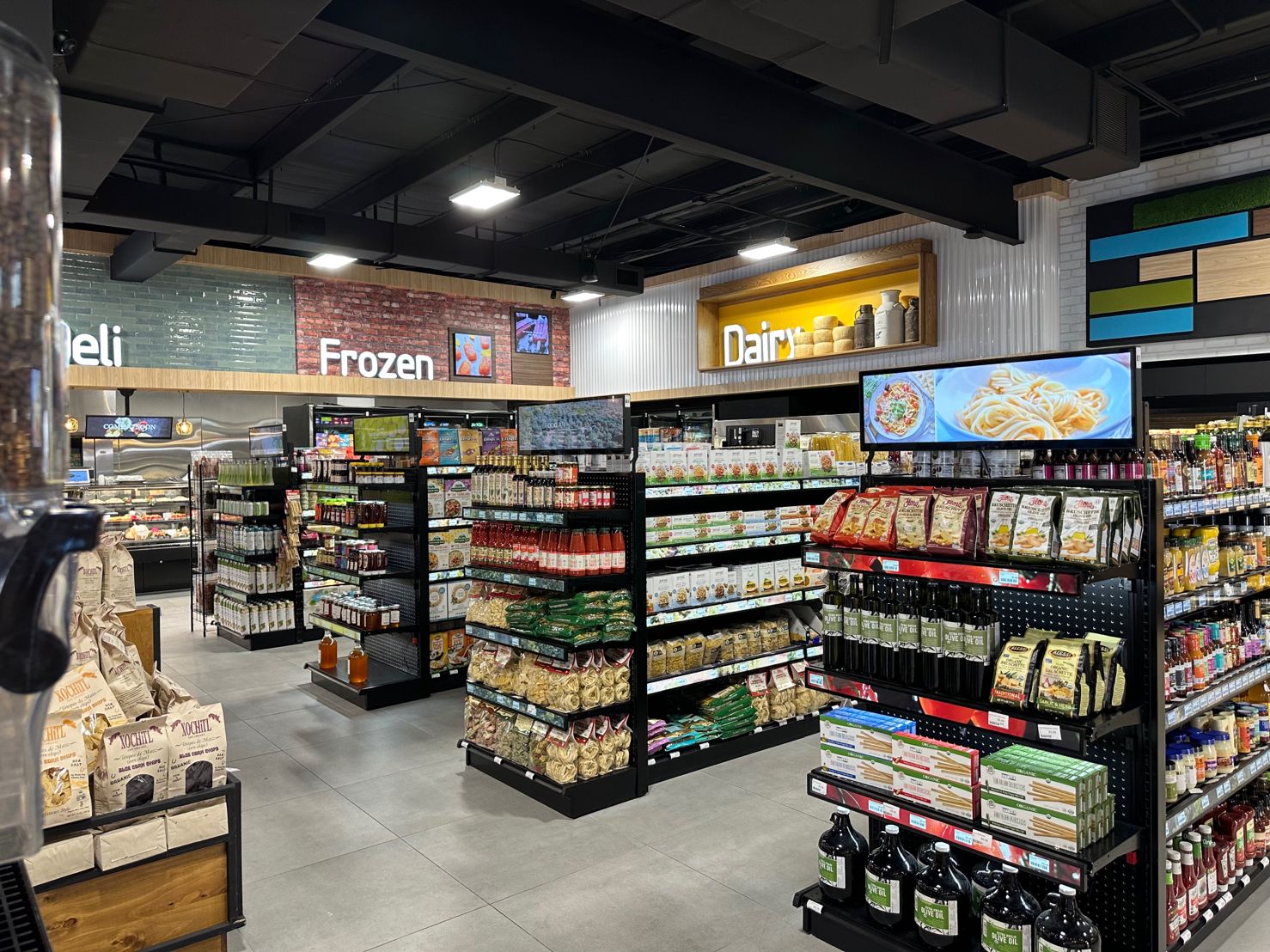
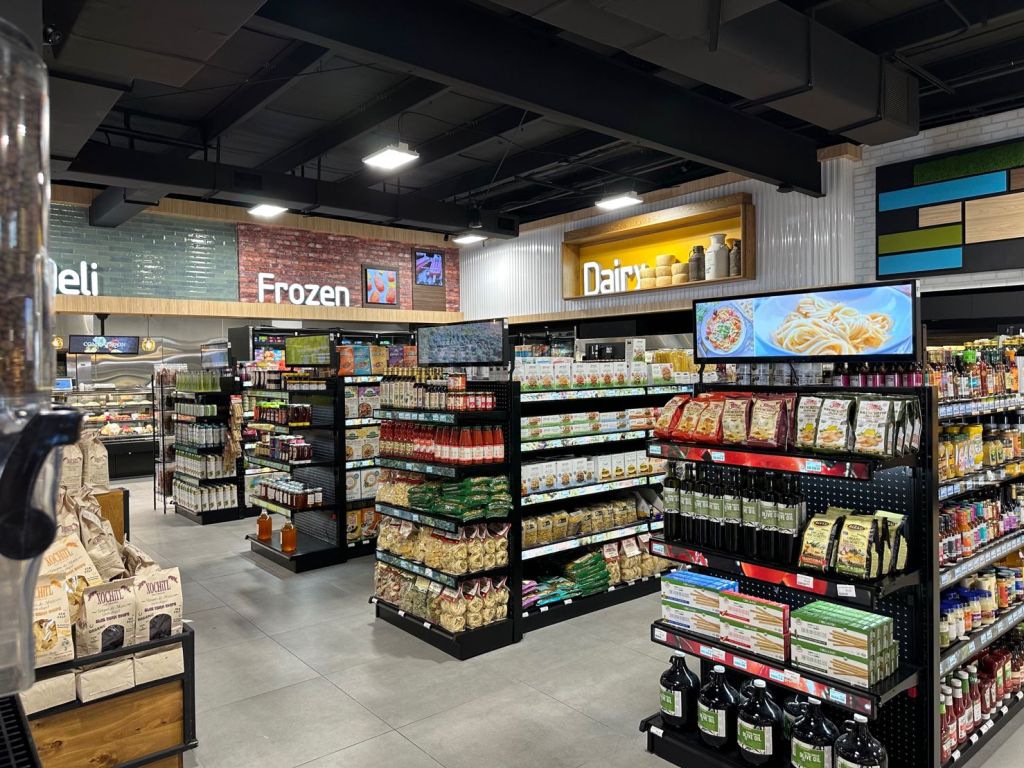
If you have walked through a modern supermarket or electronics store lately, you may have noticed something different on the shelves. Instead of the familiar paper price tags, some stores now feature sleek, bright screens running along the shelf edges, showing prices, promotions, and product information in vivid color. These are shelf edge LCD displays, and they represent a significant shift in how retailers communicate with customers at the point of purchase.
What Exactly is a Shelf Edge LCD Display?
A shelf edge LCD display is a digital screen installed along the edge of retail shelving that replaces traditional paper price tags and static signage. Unlike basic electronic shelf labels (ESLs) that use e-ink technology similar to an e-reader, shelf edge LCD displays use liquid crystal display technology to deliver high-definition, full-color content with brightness levels typically ranging from 400 to 500 nits.
These displays are typically stretched, narrow screens designed to fit perfectly along the front of standard retail shelves. They come in various sizes to accommodate different shelf lengths—common options include 23-inch, 35-inch, and 47-inch models, with resolutions reaching up to 3840×200 pixels for ultra-sharp visuals.
A complete shelf edge LCD display system typically includes three components:
– The display hardware attached to the shelf
– A communication infrastructure (Wi-Fi, Ethernet, or Bluetooth)
– Backend management software that controls content remotely
How Shelf Edge LCD Displays Differ from Traditional Tags
The difference between a paper price tag and a shelf edge LCD display goes far beyond the screen itself.
Paper tags are static. Once printed, they remain unchanged until someone physically removes them and replaces them with new ones. This process is time-consuming, error-prone, and limits what information you can present to customers.
Shelf edge LCD displays, by contrast, are connected and dynamic. They can be updated instantly from a central system, allowing retailers to change prices, run promotions, and update product information across an entire store in minutes rather than hours.
Furthermore, these LCD displays can show much more than a price. They can cycle through product images, display nutritional information, show QR codes for additional details, or run promotional videos—all in full color with high contrast ratios that make content pop.
Key Benefits of Shelf Edge LCD Displays
# Enhanced Customer Experience
When shoppers stand in front of a product, they are making real-time decisions based on price, features, and perceived value. Shelf edge LCD displays put rich, relevant information directly at this decision point. Customers can compare products more easily, see promotional offers clearly, and access detailed product information without needing to find a store associate.
The bright, colorful screens also create a more modern and engaging shopping environment. Unlike faded or handwritten paper tags, digital displays consistently present information in a professional, attractive manner that enhances the store’s overall image.
# Real-Time Pricing and Promotion Updates
Price changes are a constant reality in retail—supplier costs shift, promotions start and end, and competitors adjust their pricing. With paper tags, each change requires printing, organizing, and manually replacing tags across the store. Large retailers may change over 7,000 price tags per week by hand when using paper systems.
Shelf edge LCD displays eliminate this labor-intensive process. Prices can be updated across hundreds or thousands of displays with a few clicks. Promotions can be scheduled to start and end automatically at predetermined times, ensuring consistency and eliminating the risk of expired offers remaining on shelves.
# Improved Pricing Accuracy
Pricing errors—where the shelf price doesn’t match the checkout price—are a significant source of customer frustration and regulatory risk. When stores rely on paper tags manually changed by staff, occasional mismatches are almost inevitable.
By integrating shelf edge LCD displays with the store’s point-of-sale system, retailers can ensure shelf prices and checkout prices are always synchronized. This eliminates pricing discrepancies, reduces customer complaints, and helps maintain compliance with local pricing accuracy regulations.
# Reduced Labor Costs
The labor savings from digital shelf displays are substantial. Instead of spending hours each week walking the aisles to change tags, staff can focus on more valuable activities like customer service, inventory management, and store merchandising. For retailers with thousands of SKUs, this can translate into significant operational cost reductions.
# Dynamic Content and Retail Media Opportunities
Perhaps the most exciting benefit of shelf edge LCD displays is their ability to serve as an in-store media channel. Beyond just displaying prices, these screens become a communication channel where brands can promote their products directly at the point of purchase.
Retailers can:
– Highlight specific products with visual indicators
– Create unified brand stories across entire shelf sections
– Introduce new products with engaging content
– Link to digital experiences through QR codes
This transforms the shelf edge from a cost center into a potential revenue generator through retail media partnerships with brands.
Getting Started with Shelf Edge LCD Displays
For retailers considering the switch to shelf edge LCD displays, a structured approach is recommended:
- Identify high-traffic categories where the investment will generate the greatest return
- Choose reliable hardware designed for continuous retail operation
- Connect displays to a centralized management platform for unified content and price control
- Treat the shelf edge as a measurable communication channel, not just a set of standalone screens
Many retailers start with a pilot program in a single aisle or product category to test the technology and demonstrate ROI before committing to a full-store rollout.
Conclusion
Shelf edge LCD displays represent a significant evolution in retail communication. By replacing static paper tags with dynamic, connected screens, retailers can improve pricing accuracy, reduce labor costs, enhance the customer experience, and unlock new opportunities for in-store engagement. While the technology requires upfront investment, the operational efficiencies and enhanced capabilities often justify the transition—particularly for retailers with high SKU counts, frequent price changes, or a desire to modernize their in-store experience.
As retail continues to digitize, the shelf edge is emerging as a powerful point-of-purchase touchpoint where real-time information and engaging content can directly influence purchase decisions at the exact moment they are made.


Leave A Comment