
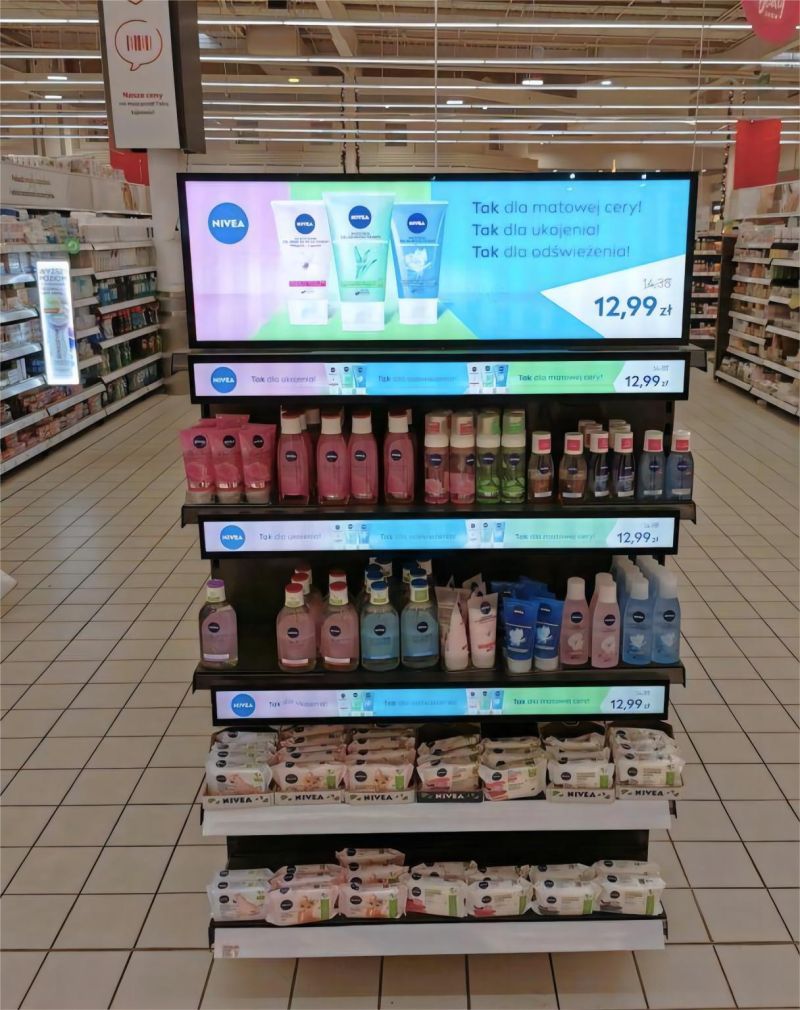
In an era where manual price changes cost retailers millions annually, digital shelf edge displays are emerging as a game-changer. Beyond replacing static tags, these screens slash labor costs, optimize pricing strategies, and boost sales—all while delivering measurable returns on investment (ROI). But how exactly do businesses quantify this value? Let’s break down the numbers behind turning SLEDs from a tech gimmick into a profit driver.
The Hidden Costs of Manual Pricing
Traditional retail relies on armies of employees to update prices, often manually swapping stickers or printing new labels. Walmart alone spends over $2 billion yearly on labor for price management. These tasks are error-prone, time-consuming, and distract staff from higher-value roles like customer service or inventory management.
SLEDs eliminate this inefficiency. By automating price updates via cloud-based systems, retailers save 8–12 hours per store weekly on labor. A 2023 McKinsey study found that supermarkets adopting SLEDs reduced price change errors by 90%, freeing up 15% of frontline staff time. This translates to direct savings—$100,000+ annually per store in labor costs alone.
Price Optimization: The Secret Weapon
Dynamic pricing algorithms integrated with SLEDs analyze real-time data (weather, competitor prices, stock levels) to adjust prices automatically. For example:
Weather-Based Promotions: Rainy days trigger discounts on umbrellas or raincoats.
Competitor Monitoring: AI scans nearby stores’ prices and adjusts accordingly.
Clearance Boosts: Mark down perishables nearing expiration without manual intervention.
A UK grocery chain using SLEDs saw a 17% increase in clearance sales after implementing automated markdowns. The ROI here is twofold: reduced waste and higher revenue from timely promotions.
Beyond Savings: Revenue Upside
While labor savings grab headlines, SLEDs also generate new income streams. Retailers can charge brands for premium ad placements on high-traffic shelves, similar to billboard advertising. A single endcap display in a cosmetics aisle might command $500/month from a skincare brand targeting impulse buyers.
Moreover, SLEDs enable “digital shelf fees”—a modern twist on traditional slotting allowances. Brands pay to ensure their products are featured prominently on interactive screens, creating a recurring revenue model. Kroger’s RMN, for instance, generates $200 million annually through such partnerships.
Calculating Your SLED ROI
To measure success, track three metrics:
Labor Cost Savings: Subtract pre-SLED vs. post-SLED labor expenses.
Pricing Efficiency Gains: Compare markdown effectiveness and waste reduction.
Advertising Revenue: Tally income from brand partnerships and ads.
A hypothetical case: A 10-store retailer investing $50,000 in SLEDs saves $120,000/year in labor, reduces waste by $30,000, and earns $40,000 in ads. Total ROI: 260% in year one.
Conclusion: The Math Adds Up
Digital shelf edge displays aren’t just about cutting costs—they’re a strategic investment in profitability. By quantifying labor savings, optimizing pricing, and monetizing ad space, retailers turn a once-expensive chore into a revenue engine. As technology evolves, those who master SLED analytics will dominate both efficiency and innovation in retail.



Leave A Comment