The retail landscape is undergoing its most profound transformation in decades—not driven by a single technology, but by the intelligent convergence of data, hardware, and human-centered design. At the heart of this shift lies digital signage: no longer static “electronic posters,” but dynamic, context-aware, AI-powered communication hubs embedded throughout the physical shopping journey.
From Broadcast to Dialogue
Legacy signage operated on a one-to-many broadcast model: fixed content, scheduled updates, zero feedback. Today’s next-generation systems—powered by edge AI, real-time inventory APIs, and anonymized foot-traffic analytics—enable true dialogue. For example, Sephora’s in-store digital mirrors don’t just display product info; they recognize skin tone via on-device CV, suggest matching foundations in real time, and trigger QR-based AR try-ons—all without uploading biometric data to the cloud.
Enhancing Experience, Not Just Attention
Digital signage elevates experience along three critical dimensions:
Personalization at Scale: Walmart deploys geofenced signage in high-traffic aisles that dynamically adjusts promotions based on real-time basket composition (via linked app data) and local weather (e.g., promoting umbrellas during rain alerts). Conversion lift: +23% in test stores (Walmart 2025 Q4 Retail Tech Report).
Frictionless Navigation & Discovery: Uniqlo’s Tokyo flagship uses floor-integrated beacons + ceiling-mounted displays to guide shoppers to restocks or limited editions—cutting average search time by 41% and increasing dwell time in discovery zones by 37%.
Trust Through Transparency: Lululemon integrates live inventory dashboards into fitting-room entry screens (“This style: 3 in stock, size M available now”), reducing staff interruptions and increasing post-fitting purchase rate by 29%.

The ROI Beyond Impressions
Critics cite cost and complexity—but ROI is increasingly quantifiable. A 2026 McKinsey analysis of 127 global retailers found that digitally enabled signage correlates with:
+18.4% average transaction value, attributed to timely cross-sell prompts (e.g., “Complete your look: add matching belt — 15% off today”)
-31% reduction in “out-of-stock” complaints, as signage auto-switches to alternatives or pre-orders when stock dips below threshold
+5.2x faster campaign iteration: Content updates now take <90 seconds vs. legacy print cycles averaging 11 days
Challenges Ahead—and Why They’re Solvable
Key hurdles remain: interoperability across CMS platforms, privacy-compliant behavioral tracking, and sustainable hardware lifecycles. Yet open standards like DisplayPort Alt Mode over USB-C and Matter 2.0 for retail IoT are accelerating plug-and-play integration. Meanwhile, GDPR-compliant “opt-in ambient sensing” (e.g., anonymous heatmaps via low-power radar, not cameras) is becoming mainstream.
The Future Is Ambient, Adaptive, and Authentically Human
The next frontier isn’t bigger screens—it’s invisible intelligence. Think:
Smart windows that double as signage and energy regulators
Voice-activated kiosks trained on regional dialects and accessibility needs
Generative AI that composes localized, culturally resonant messaging in real time
Digital signage won’t replace human connection—it will amplify it. By removing friction, surfacing relevance, and restoring agency to the shopper, it transforms retail spaces from transactional zones into trusted, responsive, and deeply human environments.
Digital Shelf Edge Displays (DSEDs) are a rapidly evolving segment of the retail tech landscape. The “top” manufacturers vary by region, technology focus, and scale, but the following list represents the most significant and innovative players globally, categorized for clarity.
Important Note: The market includes both specialized manufacturers and large retail solution providers that offer DSEDs as part of a broader ecosystem.
# Leading Specialized & Pure-Play Manufacturers
These companies focus intensely on shelf-edge technology.
- DNR Display (China)
*Why Top: A One-Stop LCD Display Solutions Platform. As a leading provider of digital shelf display solutions, they have evolved into a comprehensive “digital shelf edge” platform. They offer an extensive product line encompassing self-service kiosks, digital displays, IoT infrastructure, and advanced software for price automation, promotion management, and data analytics. Their solutions have been adopted by major global retailers including Walmart and 7-Eleven.
- Pricer (Sweden)
* Why Top: A major European leader of Electronic Shelf Label(ESL). Known for robust, reliable ESL systems and innovative solutions like in-shelf LED lights for pick-to-light fulfillment. They have a strong presence in grocery and fashion retail.
- SES-imagotag / VusionGroup (France)
* Why Top: They invented the Electronic Shelf Label (ESL) and have evolved into a full “digital shelf edge” platform (VusionCloud). They offer a vast range of e-paper and digital displays, IoT infrastructure, and advanced software for price automation, promotions, and analytics. Used by Carrefour, and many other major retailers globally.
- Displaydata (UK)
* Why Top: A well-established player with a strong installed base, particularly in the UK and Europe. They offer a comprehensive suite of e-paper labels and digital displays, integrated with strong retail software for dynamic pricing and promotions.
- M2COMM / AUO (Taiwan)
* Why Top: A key technology provider specializing in RF-based ESL systems (as opposed to infrared). Their solutions are known for long battery life and efficient two-way communication in dense store environments. AUO, a major display panel maker, is their parent company.
—
# Major Broad-Line Retail Solution Providers
These companies offer DSEDs as part of a much larger portfolio of store hardware and software.
- Samsung Electronics (South Korea)
* Why Top: Not a traditional ESL player, but a giant in high-brightness LCD/LED displays. They are a top choice for larger, vibrant promotional screens at the shelf edge (endcaps, category zones). Their SMART Signage platform integrates with various retail data sources.
- LG Electronics (South Korea)
* Why Top: Similar to Samsung, LG is a leader in commercial display technology. They offer a range of solutions suitable for digital shelf edges, from ultra-narrow bezel video walls to smaller interactive displays, often integrated with their webOS for signage platform.
- Panasonic (Japan)
* Why Top: A long-time provider of end-to-end retail technology (from POS to signage). They offer robust, retail-hardened LCD displays and have solutions tailored for the shelf edge, often integrated with their broader inventory and customer engagement systems.
—
# Innovative & Regional Contenders
- Hanshow (China)
* Why Top: The dominant leader in the massive Asian market and expanding rapidly in Europe and beyond. They offer a full spectrum of e-paper and digital shelf solutions at competitive prices, with strong innovation in color e-paper and IoT sensors.
- Altierre (US)
* Why Top: A significant player in the North American market, especially in large-format retail (DIY, grocery). Their ultra-low-power RF mesh networking technology is designed for very large stores with high shelf counts, enabling dynamic pricing and promotions at scale.
—
# Key Considerations When Choosing a Manufacturer:
*Technology: E-paper (ESL) vs. LCD/LED. E-paper is for static pricing/info (ultra-low power). LCD is for dynamic video/promotions (requires power).
*Connectivity: Infrared (IR), Radio Frequency (RF), or Wi-Fi/Bluetooth. RF scales better for large stores.
*Software Ecosystem: The real value is in the backend platform for managing prices, campaigns, and analyzing data. Ensure it integrates with your Price Management System (PMP) and ERP.
*Total Cost of Ownership (TCO): Includes hardware, software licenses, installation, and ongoing maintenance.
Honorable Mentions / Niche Players: E Ink Holdings (the core e-paper technology supplier to many), Shanghai SUNMI Tech (mobile-centric solutions), Minew (IoT and ESL solutions), NZN Labs (affordable ESLs for smaller retailers).
For a serious investment, you would shortlist players like SES-imagotag (VusionGroup), Pricer, and Hanshow for full ESL systems, and DNR or Samsung for high-impact visual promotional displays. The best choice depends entirely on your retail segment, scale, geographic location, and specific use cases.
For the fast-paced quick service restaurant, efficiency is life. Understanding all meals at a glance, ordering and serving dishes efficiently and quickly, has always been the basic needs of customers. In addition to these basic needs, deeper needs (such as interaction with customers, dissemination of culture and ideas, etc.) cannot be met by traditional static display methods. Digital menus with dynamic display and interactive functions have emerged. The digital menu board provided by DNR DISPLAY can help fast food operators produce and publish dynamic display content in a shorter time, and sell more meals to more customers.

What can the catering industry do with digital signage?
Digital signages can display dynamic content and have a stronger visual impact, thereby more effectively influencing customers’ purchase decisions;
Dynamic display can greatly increase the sales volume of the main promoted meals;
Can quickly modify to cater to changing market conditions;
Make it possible to display detailed information such as nutrition and calories of meals;
Optimize the sales process by shortening service time;
Completely eliminate the cost of printing, transportation and replacement;
It is possible to automatically switch the display content according to the time period, event, festival, weather and other conditions.
Advantages of DNR DISPLAY fast food industry solutions
For the chain form, provide the group headquarters control system for the unified production and release of display content to maintain the consistency of the brand image;
Unique screen interactive function, powerfully attract customers’ attention, more effective than traditional static display methods;
Hundreds of dynamic templates are provided, which greatly reduces the design cost and time cost of fast food operators;
Clear decentralized management mode, the headquarters, branch offices, and stores have their own rights to manage the corresponding screens and broadcast content;
Provide smart phone applications to facilitate store staff to quickly produce and publish dynamic display content;
Widely applicable to fast food restaurants of various types and sizes;

Palm, let the promotion play tricks
Match marketing with the current potential needs of customers
Using DNR DISPLAY’s digital signage, you can: according to seasons, festivals, weeks, time periods, weather and other factors, adjust the display content of the digital menu board in real time and dynamically.
According to Itai Fridman, director of retail strategy for Coca-Cola’s Israel branch, after using digital signage, Coca-Cola’s sales have increased by 20% compared to before.
Not only save money, but improve core competitiveness
The DNR DISPLAY digital poster display completely saves the design (long time and costly), product, installation and distribution costs required for traditional printed materials. Not only that, the DNR DISPLAY digital poster display can also be changed instantly. Let you use new menus and add promotions anytime, anywhere. Dealing with the timeliness of the market is as simple as that.

Digital signage provides the retail industry with a flexible and time-sensitive platform that can attract customers’ attention to products, process inventory products in a timely manner, and can help stores establish online and offline customer networks to further promote long-term customers and service.

Cost-effectiveness
During preferential promotion activities, it is often necessary to modify commodity prices and produce promotional printed materials, from the preliminary design, production, printing, transportation, and distribution of information to the staff. The entire process requires a large amount of money. The use of digital displays not only shortens the preparation time for the event, but also saves all the expenses required for paper promotional materials.
Time benefit
The price of the product can be changed easily, conveniently and quickly. Combining with the actual situation, it will maximize the role of guiding customer consumption. For example: preferential promotion for products with excessive inventory backlog and short shelf life; recommend different products according to different time periods; recommend corresponding products through changes in weather, and so on. These are not achieved by traditional digital light boxes.
Mobile phone interaction
On the one hand, digital display screens can interact with customers’ mobile phones, invite customers to participate in promotional activities at retail outlets, and increase the attention of stores. On the other hand, through interactive games, customers can be introduced to their own service platform, so as to promote new products point-to-point and improve their customer service.
Guide customer flow
The guiding digital display can help customers understand the location structure of the store, help customers accurately find different retail stores, and help them successfully complete their shopping needs.
The North Face, located in the Dragon Dream in Zhongshan Park, Shanghai, has ushered in the first new retail smart store upgrade.
According to the store display, it is divided into three areas: clothing, shoe wall, and fitting waiting area, and three products are customized according to the function to help The North Face’s new smart retail exploration
Shake clothes easily to get matching ideas
On the main wall of the clothing area, there is an interactive touch screen called “Shaking Clothes”, which is well versed in the way of clothing matching.

Pick up any single product and stand in front of the screen. The integrated sensor recognizes the person, and the exclusive label of the single product is sensed through RFID (Bluetooth displacement tag). The recommended matching poster will be displayed on the screen, and there are three small floating windows respectively. List the matching items, click to enter the product details page, you can link to the B2C platform to directly purchase. The equipment has a built-in self-distribution system, which will automatically sort when multiple people trigger the machine at the same time. Customers in the queue will display a single item on the screen for 7-12 seconds.
Functional shoe wall-quick distinction between mountaineering and hiking
As a professional outdoor brand, hiking, cross-country, mountaineering, tracing, leisure, snow boots…The functional classification of The North Face shoes is detailed and complex, which is a severe challenge for the shopping guide of physical stores.
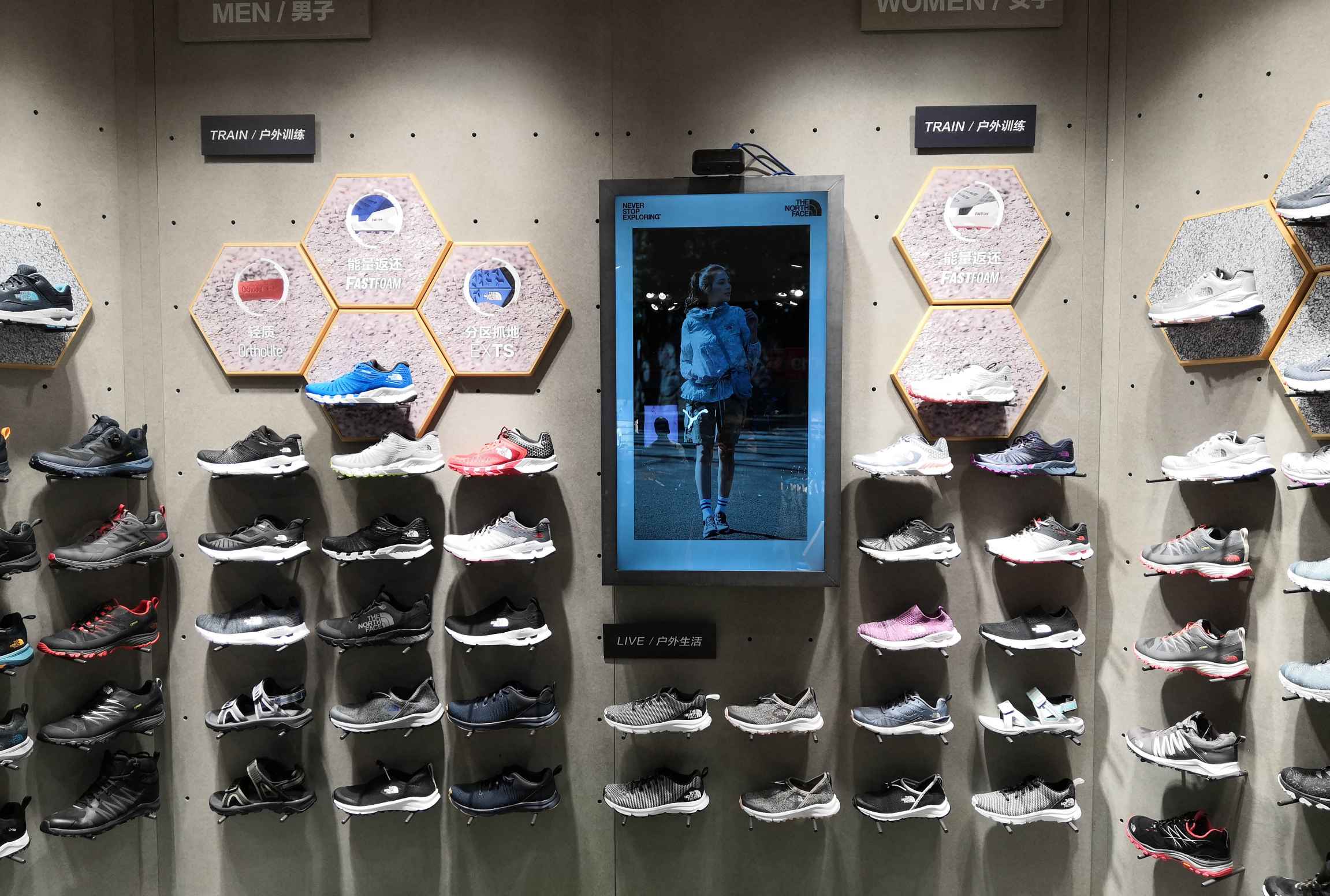
From the perspective of assisting shopping guides and even liberating shopping guides, customize the product classification interactive screen for its shoe wall. Pick up any shoe style, you can browse detailed product information on the screen, from the applicable scene to the material, to the place of production and recommended matching. It can also link to the e-commerce system, assist in product sales, and connect online and offline.
Destination recommendation-travel equipment in one step
At the entrance of the fitting room, there is a floor-to-ceiling interactive digital signage, so that the process of waiting for fitting is no longer boring.

According to the target customer group portraits, The North Face extracted 8 major travel destinations. Clicking on different locations will display the climate conditions of the area in the past 1-2 months and identify matching travel equipment recommended by men and women. Whether you are exploring Mount Everest or visiting London, you can find the most suitable item at The North Face.
As an outdoor sports brand, The North Face combines aesthetics and professionalism very well. In the process of building this smart store, we will dig deep into these two points. It is not only a bridge connecting online and online, but also a smart retail with an outdoor spirit starting from assisting the brand to deliver its own functional value to consumers. New exploration.
How to maximize the benefits of digital signage?
1.
Content is the most important: No matter how advanced the technology is, digital signage will not succeed if the content is bad. The content should be clear and concise. Of course, if a customer sees an advertisement for Charmin tissues while at McDonald’s and other Big Macs, this is also a failure.
2.
The content must be lively: Try to make the viewer remember the relevant content, so as not to forget it.
3.
Location: If the location of the screen is not noticeable (for example, hanging in the air at a height of 12 feet), then people will not look at it.
4.
Information update: The key to the success of a small-scale broadcast network is to deliver the right information to the right people at the right time. If you only replace DVD discs every month, then you are going in the opposite direction. Similarly, if you can’t simply update the price of a product item through the Internet within 15 minutes, it means that there is a problem with the digital signage platform.
5.
Closed-loop system is very important: If you can’t prove the operation of advertising, then you will not get big benefits from your digital signage. Therefore, it is necessary to pay attention not only to the broadcasting of advertisements, but also to the effects of advertisements to form a virtuous closed loop system.
6.
Don’t rely on manual updates: people always make mistakes. Therefore, the network should be used to remotely update the system. Don’t just loop the DVD. To use the Internet to continuously update the content.
7.
Oriented employees are still a powerful sales tool: Although most people always pay attention to the display screen first, employees who have a subconscious willingness to communicate will have a great impact on the promotion of the brand and the company’s image. We have to realize this, because the advertising board time is limited after all.
8.
Proper sales: At the beginning of the article, we mentioned that the advertisements of the merchants were blocked by users. They are looking for new places to advertise. And your store also has products of these merchant brands. So you can form a new cooperative relationship with them and make special promotions for their products in your network. This effect will be better, and the cost is lower than traditional advertising.
9.
Don’t go against the PC industry: use industry standard equipment. Few MPEG players will not match the PC.
10.
Plan ahead: Choose a suitable control system and make sure that the system can be continuously upgraded and updated to meet the needs of continuous business expansion in the future, without having to replace the system as a whole every time it is expanded.
11.
Network security is more important. The system can ensure the security of the media network. In each link of data transmission, from the network administrator to the player, different software and hardware technologies are used for encryption to ensure the maximum security of the system, as shown in the figure. Comprehensive security guarantees to avoid hackers and illegal intrusions, giving you peace of mind.
Recently, the frequency of use of digital signage in enterprises and organizations is on the rise. So, what is the reason? First of all, digital signage related technologies are constantly evolving and improving, which makes digital signage more practical. But sometimes, there are many factors that affect the usage rate of digital signage.
Here are three main reasons for the growing popularity of digital signage:
1. Flexibility
When it comes to traditional static digital signage, only its single content management method comes to mind. You create content and conceive the layout by yourself or by entrusting others, but at the same time, we clearly know that any content has a certain shelf life, so when the traditional notice content becomes obsolete, your options are limited. Or, you can choose other content to replace it. However, with the development of digital signage today, the content people want to publish can be customized and adapted to a specific time frame. If digital signage has interactive functions, users can find what they want in the fastest way. The flexibility of digital signage can adapt to seasonal changes and can help deliver the information you want to any place.
2. Big data
I have to say that this reason may be surprising. No matter where, there is no best way to collect data from traditional static digital signage. Therefore, there is no best way to accurately measure its effectiveness. With the development of digital signage today, this is no longer difficult.
A good digital signage solution is not only a medium for transmitting information, but also a tool to help understand user needs. With interactive digital signage and appropriate software solutions, the collection of comprehensive data becomes easier. Even more telling is that the collected data can be analyzed with cameras. Such software can measure the effectiveness of any digital signage solution. The ability to measure the effectiveness of digital signage information through powerful data analysis is a powerful tool.
3. Return on investment
One of the main reasons for the development of digital signage today is the long-term return on investment. These include two points:
(1)
The flexibility of digital signage; this means that information can be adjusted to suit the needs of different users while reducing printing costs, while redeploying new content. Such flexibility will result in new revenue generation, which will have a positive impact on the return on investment (ROI).
(2)
In today’s digital signage solutions, the ability to collect data has been enhanced. What we need to focus on now is the cost of data analysis. But we should use these software as a way to protect investment, or even a way to use investment. In turn, the benefits gained from it are uncountable and can also have a positive impact on the rate of return on investment. When the physical platform of digital signage is used to obtain digital information, it is invisibly obtained a continuously optimized return on investment. Moreover, this platform will not change easily. In fact, the move to add more information through scaling may lead to an increase in the return on investment.
Therefore, based on the above three reasons, the usage rate of digital signage is increasing. However, what type of digital signage should be used, how to manage content, whether users will use interactive or display-only digital signage, and even more questions will continue to emerge. Therefore, digital signage practitioners will continue to explore more good digital signage solutions.
Today, the stretched bar LCD display has become the most popular in digital signage product for commercial advertising. Why the stretched bar LCD display is so popular ?
1. Wide range of applications
Bar LCD display has a wide range of applications, including buses, subways, airports, shopping malls, security monitoring command and dispatch centers, exhibition center display systems, multimedia teaching, institutions, school studios, video conference systems, multi-functional exhibition halls, entertainment venues, restaurants , Publicity display, brand store image display, TV station, corporate exhibition hall, etc.
2. High efficiency and energy saving, long service life
Bar LCD display uses high-quality aluminum substrate, which has high heat absorption and heat dissipation efficiency, and minimizes the attenuation of light-emitting diodes. Minimize the influence of backlight heating on LCD substrates, and achieve the effects of energy saving, long life, effective energy saving, and lighter and thinner products.
3. High reliability and good stability
Bar LCD display substrate adopts unique technology processing, has the characteristics of industrial LCD screen, high reliability, good stability, suitable for working in harsh environments.
4. Ultra-high dynamic contrast
Bar LCD display has ultra-high dynamic contrast, more saturated and brilliant color display, more three-dimensional and realistic visual effects, ultra-fast response time, unique black field insertion and backlight scanning technology, and enhance the visual performance of dynamic images.
5. Excellent wide temperature operating characteristics
Bar LCD display can meet the requirements of fast start-up and clear image display in low temperature environment, and can work around the clock in natural environment temperature, which is very suitable for commercial advertising display.
6. Intelligent control to achieve the best display effect
The high-brightness Stretched bar LCD display is equipped with an automatic light-sensing controller, which can automatically adjust the screen brightness according to the surrounding environment, so that the screen image can achieve the best visual effect, and it can also realize the energy saving and extremely low aging of the product components.
With the huge market size and rapid growth rate, the new retail industry has become the next “track” of retail stores, becoming a more popular shopping scene and consumption path for people.
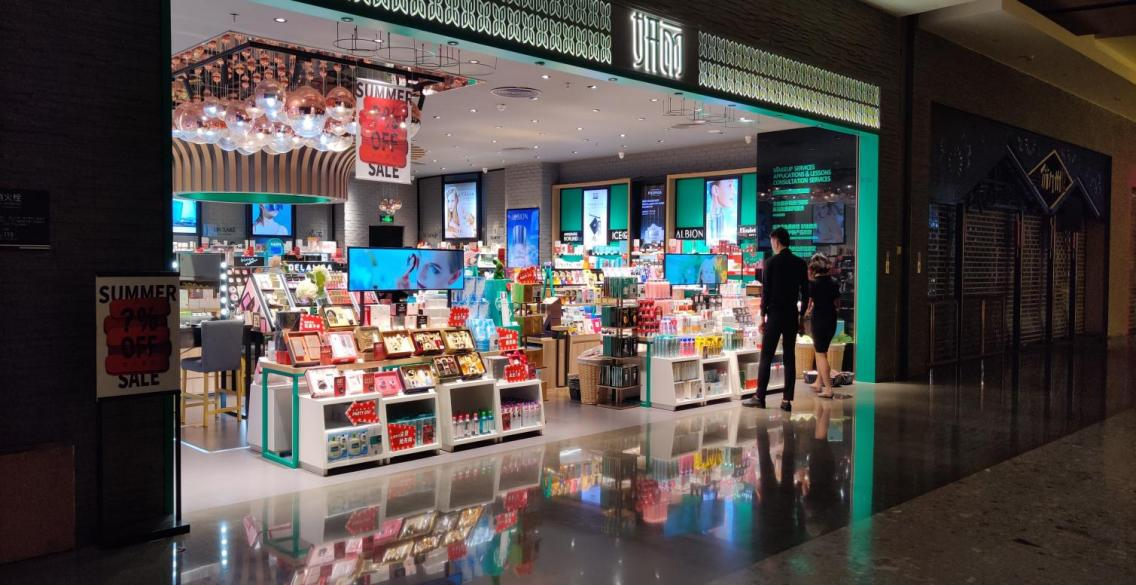
Combine the needs of consumers with the supply of back-end manufacturers and connect them through digital media, so that the entire chain of products from R&D and production to terminal sales can better meet the diverse needs of consumers, so as to achieve ” The perfect state of “people”, “goods” and “fields”. Although the prospects of the new retail industry are unlimited, it places higher requirements on the display media of retail stores. The traditional single plane display can no longer carry more information. It requires interactive multimedia audio-visual integrated equipment to display products in all directions, especially for LCD displays. There is a huge demand for smart display terminal devices such as stretched bar LCD displays.
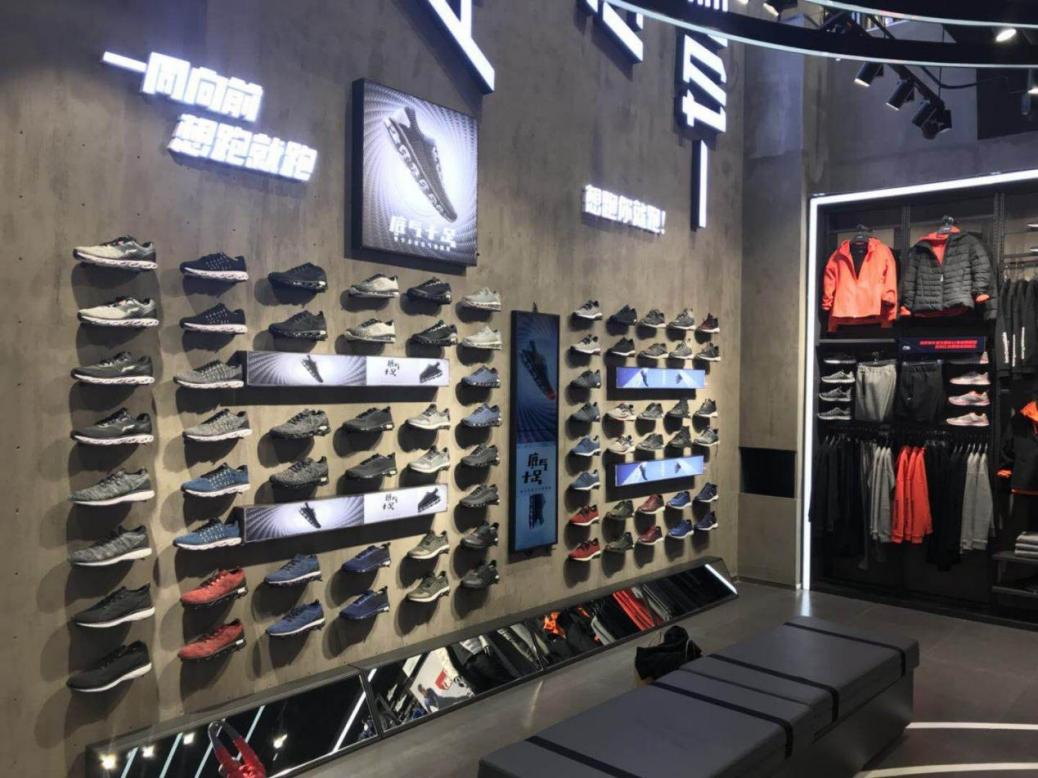
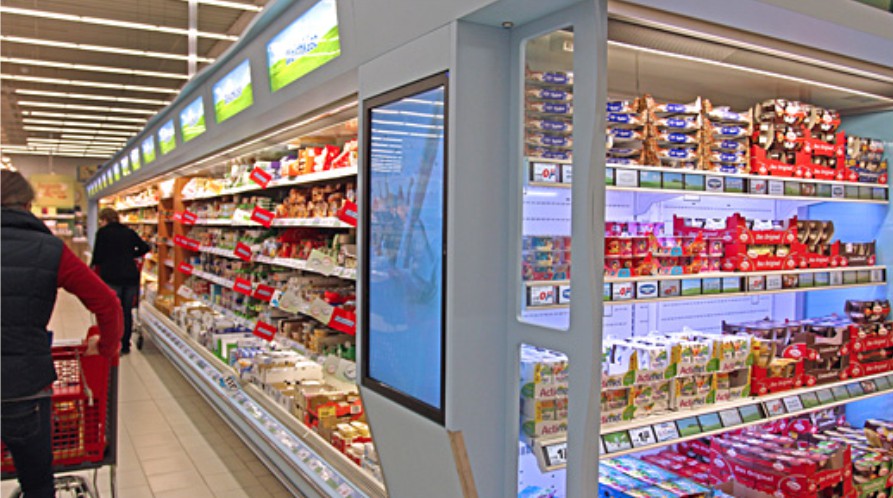
In recent years, LCD indoor high-definition digital signage and new retail smart shelf edge displays have all won rapid growth in the field of supermarkets. DNR DISPLAY, which provides a total solution for Stretched Bar LCD Display, has made breakthroughs in innovation with the help of the development of the new retail industry, and launched a smart display specifically designed for the application needs of smart new retail, unmanned supermarkets, and smart stores in the new retail field.
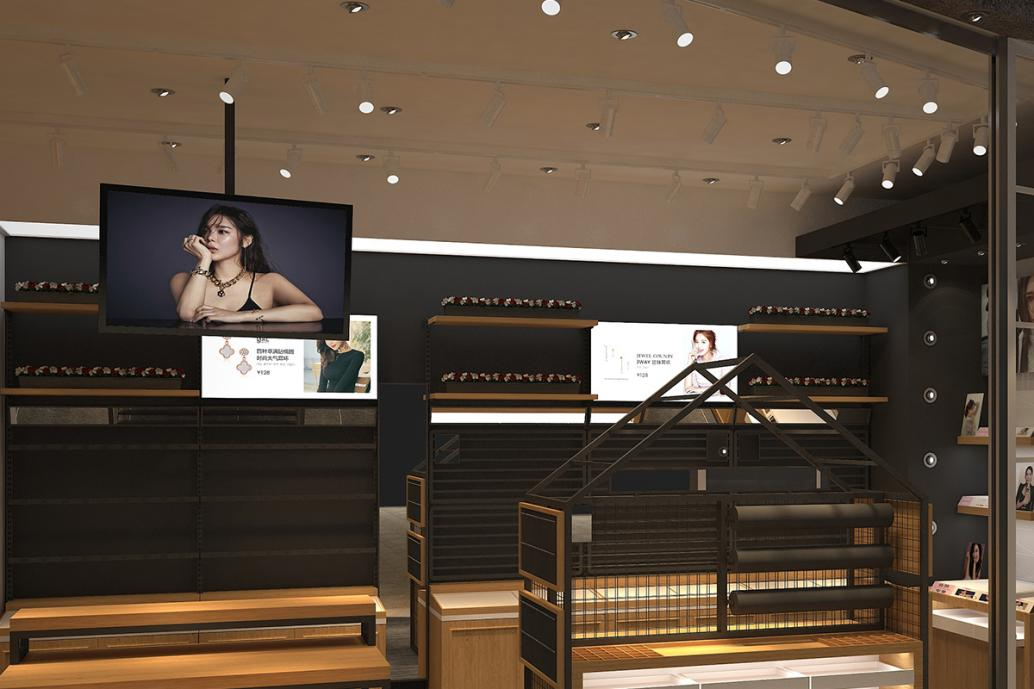
The solution breaks through the singularity of the traditional flat store display method. Through dynamic screen display, the main appeal is “design, interaction, experience”, and the scene is grafted with more cross-border elements. The entire screen area displays product information, video advertisements, and Instant information (news, weather, notifications, etc.) not only meets the emotional needs of consumers for personalization, design, etc., but also meets the value-added needs of store display video advertisements and instant information, enriches diversified experiences, and forms a new commercial space and Atmosphere.
High-definition smart shelf edge LCD display, thin and durable, more energy-saving
No matter how good it is, it is a dead letter without high-quality hardware equipment to carry it, and this is the same for new retail smart display solutions. DNR DISPLAY keeps up with the needs of the times, in order to upgrade sales from the traditional “telling style” to the fashionable “experience style”, giving consumers a better interactive experience, and taking the lead in creating higher-quality smart LCD displays.
DNR DISPLAY’s new smart shelf edge LCD display uses high-quality aluminum substrates, which have higher heat absorption and heat dissipation efficiency, which can minimize the light attenuation of the LED lamp, so that the impact of backlight heat dissipation on the LCD panel is minimized to achieve The perfect effect of saving energy and reducing consumption, prolonging the service life and being lighter and thinner.
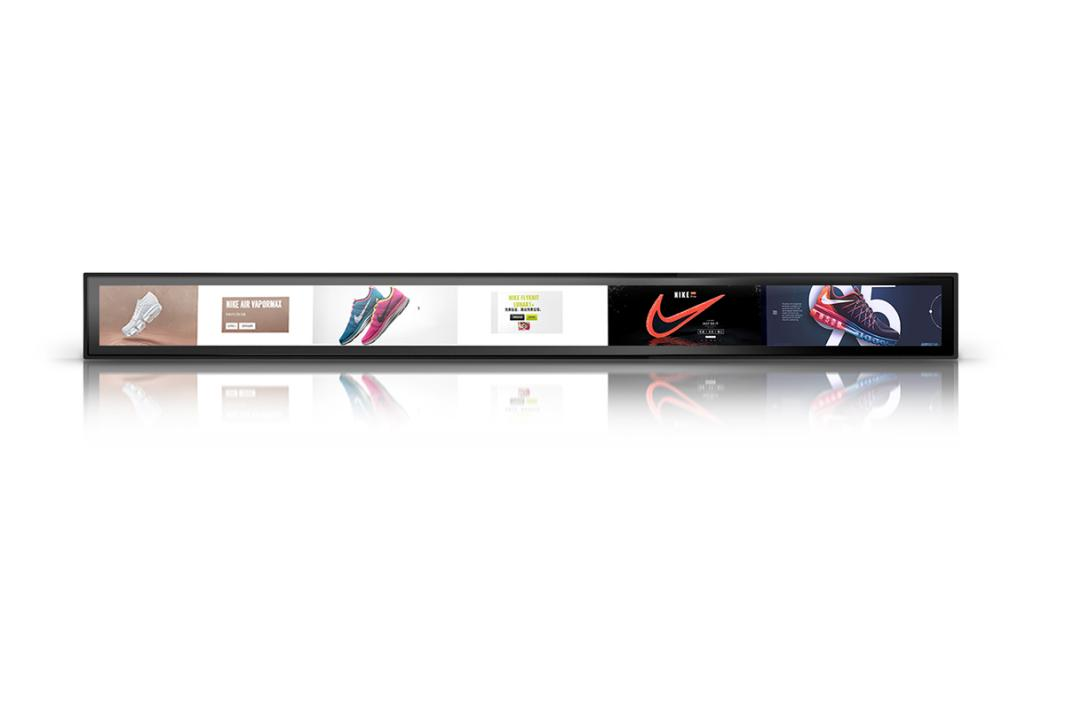
Self-developed background system, multiple adaptations and free control
DNR DISPLAY’s self-developed new retail smart display solution not only has high-quality hardware display devices, but also independently developed an operating system. There are multiple choices of pure display solutions, Android solutions and windows solutions to meet the diversified adaptation of new retail scenarios.
The background system is operated and controlled through the Chinese and English interface, and realizes the upload, zoom, switch and delete of the display content on the screen. You can also remotely monitor the display content and remotely issue and edit the content. The display content supports displaying images, text, video, PPT and other different format files.
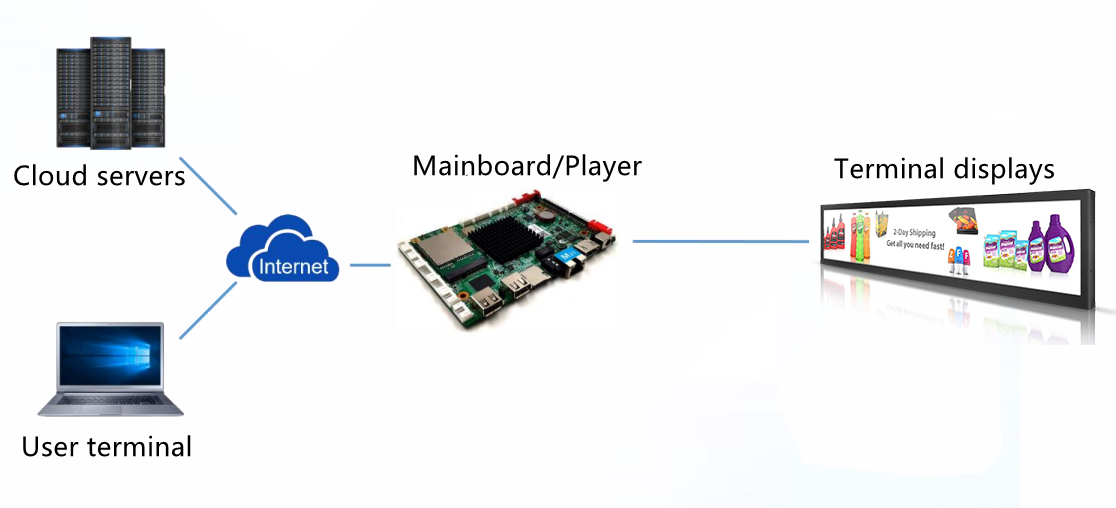
In addition, the system has a standard interface for secondary development, and customers can carry out secondary development of control software according to actual requirements.
It adopts a fully modular structure design, with good expandability and maintainability, convenient and quick module replacement, simple disassembly and expansion, long service life, short maintenance time, and easy daily maintenance.
The sales scenario with DNR DISPLAY intelligent display scheme as display terminal is becoming more and more popular. Compared with traditional physical retail, the fashionable sales space built by the smart screen of new retail can provide customers with more perfect purchasing experience through richer colors, more multidimensional information, more infectious dynamic pictures and beautiful lighting arrangement.

The terminal scene revolution under the new retail in the future should and will surely be the window through which the LCD smart display becomes a window for communicating customers’ recognition of the value of shopping malls and products. As an LCD display manufacturer that pays more attention to the experience of end customers, DNR DISPLAY has helped the transformation and upgrading of the LCD display industry with its own accumulated R&D and manufacturing heritage, and has become a veritable “leader” in smart display solutions in the new retail industry.
When we travel on the metro, the LCD metro guide screen can be seen everywhere. The existence of the LCD metro guide screen can correctly display real-time information such as the name of the current route of the vehicle, the departure time of the first and last train, the direction of travel, and the entrance and exit of the station. Provide convenience to us who travel by metro. Today we will share with you: What are the features of the metro guide screen?
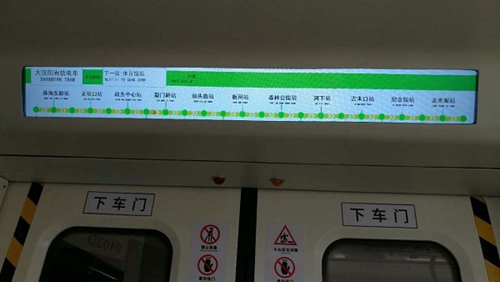
1.
The LCD metro guide screen has the features of anti-shake, dust-proof and explosion-proof.
2.
For heat dissipation, the system implements a fanless cooling mode for a highly enclosed environment to ensure the normal operation of the system.
3.
Reliability, the system adopts a special plate-making process, and special treatment is carried out for the vibration of the circuit components and the mechanical bending of the circuit board, so that the system can have a good resistance to rigid vibration and stretching.
4.
Power adaptability. Aiming at the factors of unstable power supply when the locomotive starts and accelerates, the system adopts an extremely wide voltage tolerance range and good power supply protection. Therefore, the system can work normally under very low pressure and decompress under high pressure, so as to realize the safe operation of the system.
5.
Differential signal transmission. For complex electromagnetic environment and long-distance transmission of locomotives, the system performs differential processing on weak signals so that audio and video signals can be transmitted over long distances without attenuation, and relay amplification is used to ensure the signal quality after long-distance transmission.